





















123 Laundry Solutions · Commercial Laundry Buying Guide
Buying Refurbished Commercial Laundry Equipment: What to Check Before You Buy
A practical checklist for evaluating used and refurbished commercial washers, dryers, washer-extractors, and coin-operated machines—covering condition, testing, compatibility, and costs before you order.
Quick answer: Before buying a refurbished commercial washer or dryer, confirm the exact model and serial number, what refurbishment work was completed, whether the machine was tested, which parts were replaced, its utility and installation requirements, and the written warranty or return terms. Compare the total installed cost—not just the asking price.
Used vs. Refurbished Commercial Laundry Equipment
Used describes equipment that has previously been operated. Refurbished generally indicates that a seller has performed some level of inspection, cleaning, repair, component replacement, or testing before resale. The word alone does not establish a uniform industry-wide checklist.
Ask for a machine-specific description of the work performed. A cleaned machine, a repaired machine, and a thoroughly tested machine may all be advertised as refurbished, but they are not necessarily equivalent.
Refurbished Commercial Washer and Dryer Inspection Checklist
| What to check | What to ask or verify |
|---|---|
| Model and identification | Request manufacturer, complete model number, serial number, approximate age if known, and photos of the data plate. |
| Refurbishment scope | Ask which components were inspected, repaired, rebuilt, or replaced. Request documentation when available. |
| Functional testing | Ask whether a complete wash or dry cycle was tested and what the test covered. A video or test record can help, but does not replace inspection. |
| Physical condition | Review cabinet damage, corrosion, door and gasket condition, controls, drum or basket condition, and visible leaks or wear. |
| Electrical and utilities | Verify voltage, phase, amperage, gas type where applicable, water supply, drainage, and exhaust requirements against the exact model. |
| Payment controls | For coin-operated machines, verify the coin mechanism, pricing controls, cash box and keys, or other supported payment configuration. |
| Replacement parts | Confirm the availability of compatible service parts using the complete model and part numbers. |
| Delivery and installation | Confirm equipment dimensions, door clearances, unloading, site access, installation responsibility, and any freight damage procedures. |
| Warranty and returns | Request written coverage, exclusions, duration, return eligibility, and responsibility for shipping or labor. |
Safety: Electrical, gas, and mechanical inspections should be carried out by qualified personnel. Do not operate equipment with damaged safety systems or bypass interlocks to test it.
Washer-Specific Checks
- Door and seal: Ask about door latch operation, gasket condition, and evidence of leaks.
- Basket, bearings, and vibration: Ask whether unusual noise, excessive vibration, or basket movement was found during testing.
- Water and drainage: Confirm fill, drain, and spin functions were checked under appropriate conditions.
- Controls: Confirm that the control panel and programmed cycles function as described.
Dryer-Specific Checks
- Heating: Confirm that heating performance was tested for the listed fuel type.
- Airflow and exhaust: Verify the model's venting requirements and check the intended site's ductwork separately.
- Drum and drive: Ask about tumbling, belt or drive condition, and unusual operating noise.
- Safety devices: Ask whether door switches, thermostats, and applicable safety controls were checked by qualified personnel.
Check Capacity, Configuration, and Site Compatibility
A lower purchase price is not useful if the machine cannot be installed or cannot meet your laundry volume. Compare rated capacity, physical dimensions, cycle requirements, loading access, and utility connections. When reviewing a product listing, match its complete model number to the manufacturer specifications rather than assuming that all machines in a brand or capacity class have identical requirements. For stacked units, confirm the requirements for both washer and dryer sections independently.
For self-service laundromats, verify that the exact listed machine supports the payment method you need. For staff-operated facilities, compare workflow and throughput rather than assuming a coin-operated configuration is necessary.
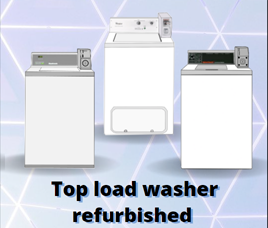
For broader model comparisons, see our commercial washing machine brands comparison and front-load vs. top-load washer guide.
How to Compare Refurbished Commercial Laundry Machines
Use the equipment type and the exact model specifications to narrow your options. The examples below illustrate what to compare; they are not claims about the condition or current availability of any individual machine.
| Equipment example | Best questions to ask | What to verify |
|---|---|---|
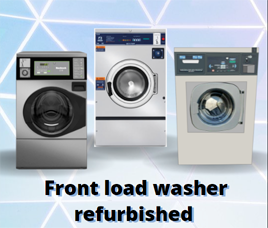
| Speed Queen coin-operated front-load washer | Does the machine support your preferred coin or payment configuration? What capacity does the model provide? | Exact model, payment controls, door seal, spin performance, voltage, and drain requirements. |
| Dexter commercial washer-extractor | Does the rated capacity and extraction performance suit your laundry volume? | Model-specific electrical phase, mounting requirements, bearing condition, vibration, and service-parts compatibility. |
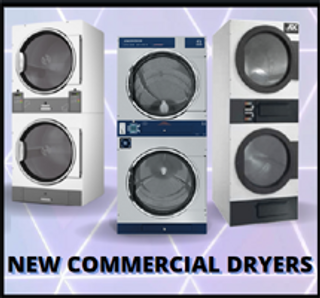
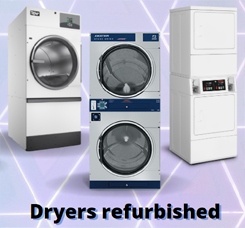
| Commercial stack dryer | Does a stacked configuration fit the site and provide sufficient drying throughput? | Overall height, gas or electrical supply, venting, drum operation, and controls for each pocket. |
Buyer tip: A brand name or advertised capacity is only a starting point. Compare the data plate and individual listing against your site requirements before ordering.
Compare the Total Cost of a Refurbished Machine
Consider the purchase price plus freight, unloading, installation, utility changes, necessary accessories, expected maintenance, and possible downtime. Ask what is included in the sale and what is excluded.
Machine age alone cannot reliably predict remaining service life. Usage history, maintenance, operating conditions, parts support, and current condition all matter. Avoid relying on an unsupported fixed lifespan estimate.
If you are still deciding whether to own equipment, read our Buy vs. Rent vs. Refurbished comparison, which explains ownership, rental agreements, and long-term cost considerations. Our rental program is available only in qualifying areas of Orange, Los Angeles, Riverside, and San Bernardino counties; equipment and parts shipping is a separate offering.
What to Confirm Before Ordering Refurbished Laundry Equipment
Before purchasing a refurbished commercial washer or dryer, review the equipment listing and confirm the details that matter for your facility. Because refurbished machines can vary in condition, configuration, and included components, evaluate each unit individually.
- Model and identification: Confirm the complete model number and available serial number information.
- Equipment condition: Review the stated condition and any available information about repairs, refurbishment, or component replacement.
- Operational testing: Ask what testing was performed and whether supporting information is available.
- Product photographs: Determine whether the images show the exact unit or are representative photographs.
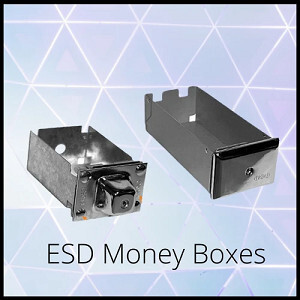
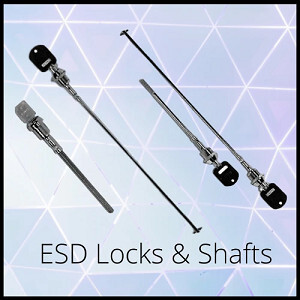
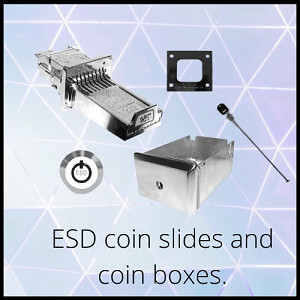
- Included components: Verify whether coin mechanisms, coin boxes, keys, hoses, or other accessories are included.
- Installation requirements: Confirm electrical specifications, water connections, drainage, gas supply, venting, and equipment dimensions as applicable.
- Replacement parts: Check the availability of compatible parts for the specific model.
- Warranty and shipping terms: Review applicable warranty coverage, return conditions, freight arrangements, and damage-claim procedures.
- Availability: Confirm that the specific equipment is available before making purchasing arrangements.
Frequently Asked Questions
Is refurbished commercial laundry equipment reliable?
It can be, but reliability depends on the individual machine's condition, prior usage, refurbishment work, testing, and ongoing maintenance. Ask for specific evidence rather than relying on the label alone.
Is a refurbished machine the same as a used machine?
Both have been previously used. Refurbished generally implies additional work, but sellers may use the term differently. Confirm the actual work completed.
Should I buy a refurbished washer or dryer without seeing it in person?
If an in-person inspection is not practical, request the exact model and serial number, current-unit photographs, testing information, written condition details, and clear freight and return terms. Consider an independent qualified inspection when appropriate.
Do refurbished commercial machines come with warranties?
Coverage varies by seller and individual listing. Never assume a warranty applies without reviewing the written terms.
What matters more: machine age or condition?
Both matter, but age alone is insufficient. Operating history, maintenance, parts availability, test results, and present condition are essential to evaluating a specific unit.